Qi Gong: What It Is, Why People Do It And What To Expect
You may have noticed Qi Gong popping up more often in local wellbeing circles recently. Yet despite its long history, it's something many of us know relatively little about.
With more opportunities to experience Qi Gong locally, we thought it was time to take a closer look at what it involves and why this ancient Chinese practice has stood the test of time.
Pronounced "chee-gong", it's rooted in traditional Chinese philosophy and closely associated with Traditional Chinese Medicine. It has been practised for thousands of years. Part exercise, part meditation and part breathing practice, Qi Gong doesn't fit neatly into a single box, which is perhaps one reason why it can feel difficult to define.
So, to help us better understand the practice, we spoke to certified Qi Gong teacher Craig Tuberville.

What Exactly Is Qi Gong?
For Someone Completely New To Qi Gong, What Happens In A Typical Class?
A typical Qi Gong class begins with around 10 to 15 minutes of gentle movement coordinated with deep, controlled breathing.
This allows us to begin calming the nervous system. That first step is important because the body will not readily release held tension while it remains in a stress state.
We then spend time working with targeted, gentle movements designed to release tension from the areas where many of us hold it most, including the upper back, neck, shoulders, chest and heart centre.
Later in the class, we practise short sequences designed to help regulate the vagus nerve, which plays an important role in helping the body move between its 'fight or flight' and 'rest and digest' states.
We finish with flowing sequences designed to cultivate the body's natural energy, leaving us with a calmer, clearer headspace and a sense of natural energy that's ready to meet the challenges of the day.
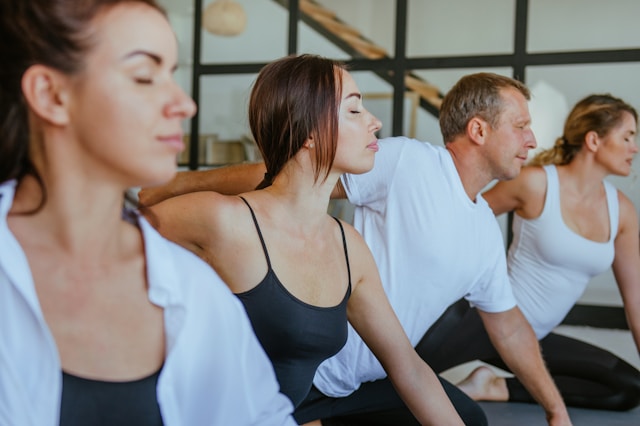
At First Glance, Qi Gong Can Look Quite Simple. What Do You Think Surprises People Most When They Actually Try It?
Qi Gong movements and practices can definitely appear simple at first glance. What I think surprised me, and most practitioners when they first start practising Qi Gong, is the potency of those simple movements.
Qi Gong movements are intentionally designed to be simplistic. This is a key part of the practice. Qi Gong is designed to help us calm the body and, in doing so, the mind.
Unfortunately, we often disregard the simple, unconsciously ascribing too much value to the overcomplicated.
However, if you try to use overcomplicated physical movements as a way to encourage mental calm and clarity, you are unintentionally creating the conditions for your mind to start worrying yet again. In effect, it starts asking questions such as, "Am I doing this right or wrong?" This would be counter to what we are looking to achieve.
Qi Gong therefore takes a very intentional 'less is more' approach to the physical part of the practice. It encourages us to learn easy-to-master movements and focus on letting go of what is weighing us down. This prevents us from getting hung up on the idea that we have to learn or do more before we can even begin to experience the benefits of the practice.
Therefore, most people can experience a deep level of calm during their very first class.
What Would You Say To Someone Who Feels They're Not Flexible Or Fit Enough To Try Qi Gong?
"Come along to a class, give it a try and be prepared to pleasantly surprise yourself."
Qi Gong is the ultimate low-impact exercise form. While the breathwork and controlled breathing we do in class has a fantastic cardiovascular strengthening component, all movements are performed in a slow, controlled and rhythmic fashion.
Most movements can be taught from a simple standing position, with chair-based modifications available for almost all of them.
Qi Gong does have its own adage, based on the gym-goer's mantra of "No pain, no gain". Personally, I prefer the Qi Gong version, which simply reads:
"No pain."
Qi Gong really is open and accessible to all fitness and flexibility levels, and all age groups.
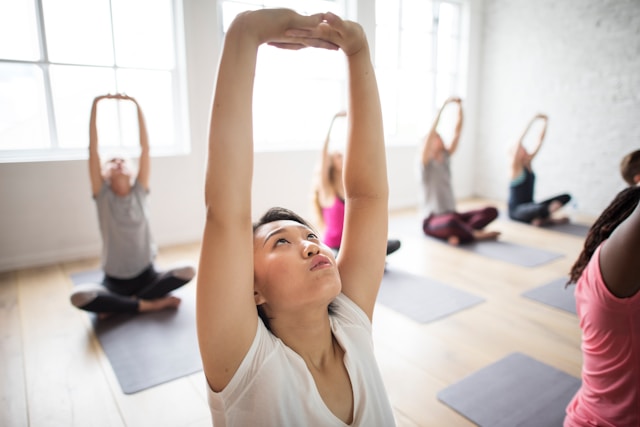
Curious To Give It A Try?
The best way to understand Qi Gong is to experience it for yourself.
Explore Craig's classes here.

Get content on wellbeing and local life straight to your inbox
We think you'll like these articles too...


LIVE LIFE WELL. LOVE LOCAL. LOVE THE LIST.
LIVE LIFE WELL.
LOVE LOCAL.
LOVE THE LIST.
Get content on wellbeing and local life straight to your inbox
© 2026 The List Limited. All Rights Reserved.