Demystifying Meditation: Your Guide To Stillness, Breath and Everyday Balance
By Guest Contributor David Green
"How’s your breath today? Are you breathing like a god, or a dog?" That was the opening line from Meditation Teacher, Mentor and Author, David Green at one of our Wellbeing Events. It raised a smile, but there is meaning behind the humour.
As David explained, our breath says a lot about how we live. And if you’ve ever felt tense or agitated - who hasn't? - it might be time to take a closer look, not just at your lifestyle, but at your breathing. It’s something we do all day, every day, yet rarely stop to notice.
That’s where meditation comes in. It might sound mysterious, even a little intimidating, but at its heart it’s incredibly simple. You don’t need incense or a guru. All you need is a willingness to pause, breathe, and pay attention.
Let’s hand over to David to break it down.

What Is Meditation?
Meditation isn’t about banishing thoughts. It’s about letting them come and go, like waves on the sea. You are the witness. You breathe. You sit. You simply be.
True meditation is a stillness practice. It’s the act of witnessing your breath, your thoughts, your body, and in that quiet observation, something begins to shift. It’s about training your attention. Gently, kindly, and consistently.
Think of it like cleaning pots and pans. You wouldn’t cook a lovely meal in a dirty pan, would you? Well, our minds are the same. They gather up residue, such as stress, worry, the endless noise of daily life, and meditation is the gentle scrub that clears some of it away.
What Meditation Is Not.
Many people tell me their ‘meditation’ is golf or swimming or walking the dog. And while all of these things are positive experiences, they are not meditation.
Meditation is also not about becoming someone else, or magically switching off your thoughts. Spoiler alert: your mind will still be busy when you start to meditate. Many people say, 'My mind got even busier when I started to meditate' and they stop because they think they’re doing it wrong. But here’s the thing - your mind was always busy.
Meditation doesn't make it noisier. It just helps you notice.
The Breath, Body and Mind Connection.
Let’s go back to the breath. In yogic philosophy, there’s a long-held belief that hat our lives are measured in breaths, which is why slowing the breath is seen as a way to cultivate calm and longevity. You can see echoes of this idea in nature, where slower, steadier rhythms are often associated with longevity. Animals like whales, elephants and tortoises tend to live much longer than those with faster, more rapid breathing patterns, such as rabbits or dogs.
Most of us breathe around 16 times a minute, often without noticing. But the quality of our breath can say a lot about our state of mind. Shallow, fast breathing can signal stress or agitation. Calm, deep breaths often go hand-in-hand with clarity and peace.
There’s a hidden beauty here, with growing evidence that working with the breath can positively influence how we feel and think.
Ancient Wisdom, Modern Relevance.
Much of what I teach draws from yogic philosophy, particularly the work of Patanjali, a sage who lived thousands of years ago. According to this tradition, the spine is home to an invisible channel called the Sushumna, flanked by two other channels: Ida (left) and Pingala (right).
In yogic tradition, it’s believed that these channels link to our nostrils, and they’re not just about airflow. They relate to energy flow. When we’re restless, we often find very little breath coming from the left nostril. When we’re low in energy, it’s the right one that’s blocked.
Meditation gently balances these channels, and with them, our energy. You don’t need to control your breath, just observe it. When you breathe naturally through the nose, you support more efficient breathing, filter the air and begin to create calm from within.
Fun fact: many athletes are now exploring nose breathing for better focus and endurance.
Your Inner Energy Centres.
Now here’s where it gets a little more in-depth, but bear with me. The body, in yogic thought, has seven main energy centres, or chakras, running from the base of the spine to the top of the head.
Each chakra corresponds to a part of your physical and emotional life, as follows:
-
The base of your spine: Physical health, stability, and material security
-
Lower abdomen: Relationships, family and creativity
-
Stomach area: Digestion, willpower, and what you 'take in' emotionally and physically
-
Heart centre: Emotions and compassion
-
Throat: Communication and self-expression
-
Forehead, between the eyebrows: Intuition and insight
-
Crown of the head: Connection to something greater
When you sit in meditation, focusing attention gently through these centres, you begin to realign not just your breath and body, but your entire way of being.
Planting the Seed.
There are many techniques of meditation you can try, and the reason most people give up is because they expect an instant result. But first you have to plant the seed. Years ago, I met a Guernsey grower who told me he used half a tomato seed for each plant. His father used just a quarter. Imagine how small that seed must be, and yet it grows into something full of life.
Meditation is like that seed. At first, it seems like nothing is happening. Just you, sitting quietly, often with thoughts running at 1,000 mph. But with a little patience and care, it blossoms into something powerful: more clarity, more calm, more connection to yourself. A state beyond the body and thoughts.
When I was a young entrepreneur, burnout hit me in my early 30s. Meditation was my lifeline. Even when I had a 5am meeting, I carved out 30 minutes to sit, every day without fail. It changed everything.
We always find time for the things we truly value. This, I promise, is worth valuing.

Tips for Starting Your Own Practice.
Here's the link to the full guided meditation, and there are a few things to keep in mind if you’re ready to give it a go:
-
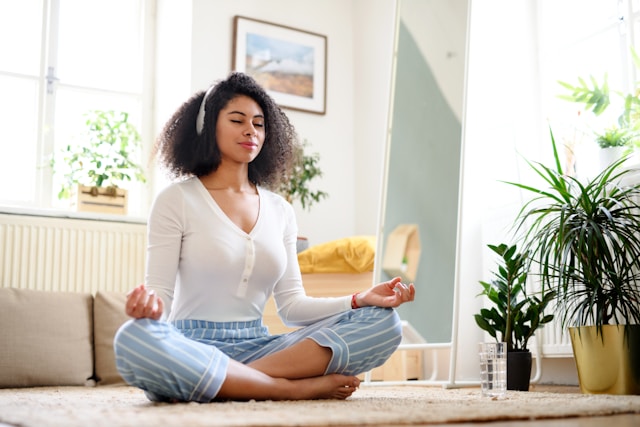
Sit comfortably but upright. This opens the energy channels and keeps you alert.
-
Close your eyes. This shuts off external distractions and turns your focus inward.
-
Chin slightly down. This can help maintain focus and prevent drowsiness.
-
Breathe in gently through the nose. No need to control it, just notice it. Exhale through the nose.
-
Focus your attention just above the eyebrows, a little inside, then move your attention slowly down the body, 2-3 minutes at each energy centre.
-
Ignore the thoughts. They’ll come. Let them. Your job is to return gently to the breath.
Remember, you don’t have to feel peaceful during meditation for it to be working. You’re planting a seed. Let it grow. Peace will come in time.
Meditation isn’t magic, but it can bring magic into your life. Not in the form of fireworks or revelations, but in a quieter, deeper way. More space between your thoughts. More ease in your breath. More joy in your days.
So, how is your breath today?

Meet David…
David is a Guernsey-based Author, Mentor and Meditation Teacher who blends spiritual insight with career success and contentment. A former bond trader in the City of London, he started his own finance company at 23, before selling up in his forties. His life took a transformative turn at the height of his career after meeting an Indian guru who encouraged him to embrace meditation as a daily practice.
David is known for delivering the world's first silent TEDx talk after spending 300 days in silence and seclusion. He now helps individuals and organizations connect meditation, success and purpose, offering practical tools for inner balance and meaningful achievement.
David is the author of The BIG Secret of HOW to find Happy Meaningful Success, a guide to personal growth and finding your true purpose.

Get content on wellbeing and local life straight to your inbox
We think you'll like these articles too...


LIVE LIFE WELL. LOVE LOCAL. LOVE THE LIST.
LIVE LIFE WELL.
LOVE LOCAL.
LOVE THE LIST.
Get content on wellbeing and local life straight to your inbox
© 2026 The List Limited. All Rights Reserved.