We Asked Five Sustainability Experts: What’s The One Change Everyone Should Make For The Environment?
Living life sustainably can sometimes feel overwhelming. With so much advice out there, and some changes seeming confusing or expensive, it's difficult to know what to do to make a real difference.
So we asked five local experts who work in very different areas - from policy and business to food and nutrition, community action and energy - this question: If you could encourage everyone to make one change for the environment, what would it be?
From learning a little more and using our individual voices and influence, to being more mindful about the food we eat, repairing and re-using what we already have and making small shifts when we use the island’s power supply, here’s what they said.
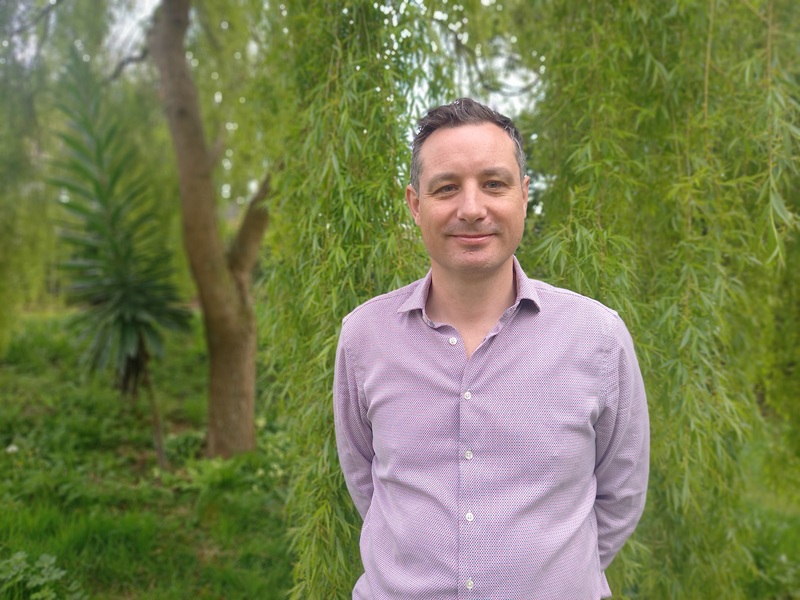
Rollo de Sausmarez.
Rollo de Sausmarez is a Partner and Sustainability Strategy Lead at UN1TY Trusted Advisory, who helps businesses on their sustainability journey.
Rollo believes influence is your secret weapon for change.
“The awkward truth is that sustainability is many things and individuals only really have genuine agency over some of them. We all routinely underestimate our influence though, and that influence can drive change orders of magnitude greater than our individual acts, so we must do that too, right? Let’s explore what that looks like.
We have influence at the ballot box. Use your vote for individuals who are going to act on sustainability and environmental issues (and don’t vote for those don’t). Email all of them too, to let them know it's important.
We have influence at work. Ask your leaders and colleagues what your business is doing on these issues. Questions can be powerful if the answers are awkward. You can also suggest your work’s charity of the year is sustainability related for example.
We have influence with our family and friends. Let them SEE your sustainable choices working (like how you get to work everyday, your food choices) without lecturing them about them.
We even have influence with strangers. You can like and share useful and impactful content (like this article!), support and back up those making a noise, or even write your own pieces.
One thing is for sure, embracing the power of your influence will create powerful ripples that drive change and empower others to do the same.”

Vivienne Alexa.
Vivienne Alexa is a Registered Nutritional Therapy Practitioner, Health Coach and Author of ‘From Plant to Planet’, with a passion for helping people to feel good and perform better by making sustainable food choices.
Vivienne encourages curiosity over perfection, especially around our food choices.
“If there’s one place where small everyday choices can quietly make a big difference for the environment, it’s on our plate. I would encourage everyone to become a little more curious about the food they eat because it accounts for around a third of global greenhouse gas emissions, uses about half of the world’s habitable land, and is one of the biggest drivers of freshwater use.
Whilst this may sound overwhelming, the hopeful part is just how powerful small, everyday choices can be - and this isn’t about perfection or cutting out foods you love. It might be enjoying a few more plant-forward meals with plant proteins like beans and lentils in place of meat to reduce greenhouse gas emissions, or by choosing organically or regeneratively produced food to avoid fertilisers and antibiotics, and promoting soil health.
Reducing food waste is another quiet win - planning meals, buying only what you need, freezing leftovers and using what you already have saves money and precious resources. Food is deeply personal, intertwined with culture and emotion, and exploring it with curiosity is about awareness, not judgement.
Small shifts, made with intention, really do add up and benefit our health, as well as the environment.”
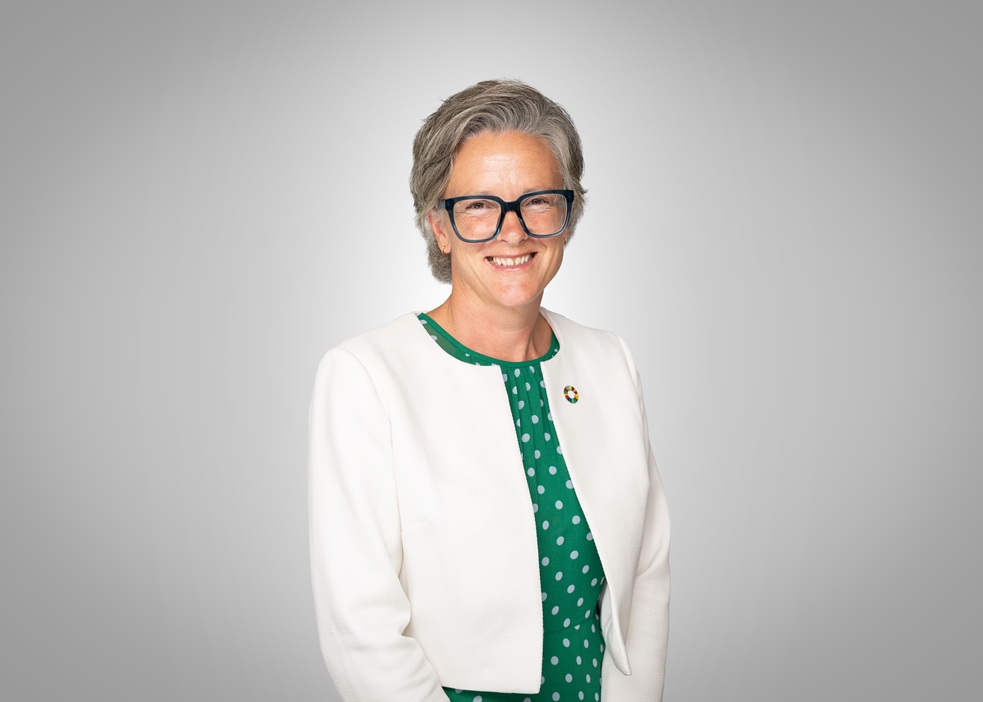
Sally Rochester.
Deputy Sally Rochester is Vice President of the Committee for Environment & Infrastructure, helping to create and deliver policies to protect and enhance the natural and physical environment and develop infrastructure in order that present and future generations can live in a community which is clean, vibrant and prosperous.
Sally reminds us that sustainability isn’t always straightforward, so knowledge matters.
“Sustainability is a really complicated topic. It brings together climate issues, social issues, health issues, the economy and many other aspects of our lives. One of the reasons it is so hard to know what to do for the best if we want to create a better world, is the unintended consequences of what we think is a ‘good thing to do’.
For example we have all been told that burning fossil fuels is a bad thing to do. Combustion engines result in pollution and carbon emissions, yet we also know that buying a brand new electric car contributes to human rights issues resulting from mining for rare minerals. How can we know what the least worst option is?
If making the right choice feels overwhelming then how about learning a little more? There are lots of great sources of information focusing on different aspects of sustainability, which might give you a better understanding of sustainability as a concept and help guide you to decide what actions you want to take.
If you’re not sure where to begin, I recommend the books How Bad Are Bananas? for a simple, accessible way to understand carbon footprints and Ravenous for a brilliant perspective on our food system - along with the Outrage + Optimism podcast for thoughtful climate conversations with a sense of hope and the National Emergency Briefing on Climate & Nature for bite-sized 20-minute briefings you can take one at a time.
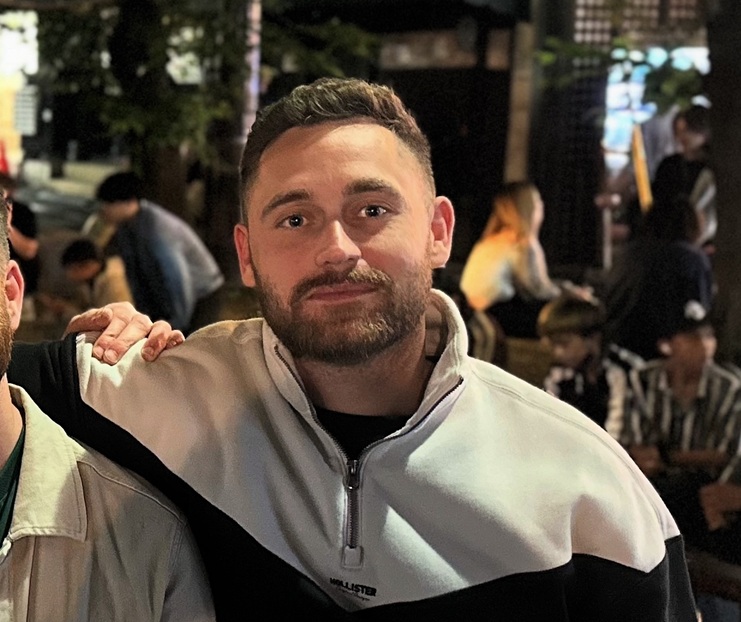
Robbie Watson.
Robbie Watson is a Control Room Operator at Guernsey Electricity, helping to manage the Island’s power network 24/7.
Robbie’s message is a practical one: move power-hungry habits to off-peak hours.
“If I could rally everyone to make just one change for our local environment, it would be this: shift your electricity-hungry habits to off-peak hours. Such as delaying your washing machine, tumble dryer, dishwasher (anything that can generate heat can be energy sapping) – and the big one, heating your water. And here’s the fun part: you can take advantage of Guernsey’s low-rate import charges from 11pm to 5am too (perfect for heating water, charging your EV, drying your clothes, washing your dishes etc...).
In my job in the control room, I see how electricity peaks and dips throughout my shift. I’m part of the team that switches on our fossil-fuel generators when demand starts to climb from around 5am, and again around 4pm during the colder, darker months. And I oversee the low-carbon renewable electricity imported from Europe flowing into Guernsey’s grid too.
So I know that, by spreading out demand, we can make big gains towards achieving our max target import and hit that sweet 125MW ‘maximum demand’ objective at Guernsey Electricity, keeping things efficient and eco-friendly without breaking a sweat - or the bank! The best time is from 11pm to 5am (100% low carbon). If a nightshift isn’t realistic, off-peak daytime hours are from 10am – 4pm. It’s truly a small tweak with big impact: lower emissions, a happier planet and a happier consumer.”

Olivia Bennett.
As Project Co-ordinator, Olivia Bennett is an integral member of the Operational Team at The Clean Earth Trust.
Olivia wants us to focus on reducing consumption through repair, re-use and community action.
“As a charity, here at The Clean Earth Trust we live by the motto that ‘ants can move mountains’, believing that small actions can create meaningful change. We promote this by encouraging people to reduce what they consume, both individually and collectively.
Through our Repair Café initiative, we show how repairing, reusing, and repurposing everyday items can be a practical alternative to buying new. This message is reinforced through our clothes swap, which demonstrates how easy it is to exchange clothing that feels ‘new’ to us, without adding to demand for new products.
Alongside this, we run weekly beach cleans that help protect our natural environment while bringing wider community and wellbeing benefits. Plastic is everywhere, from food packaging to clothing, and by reducing our reliance on new items, particularly plastics and fast fashion, we can significantly reduce our environmental impact.”
A Collective Message.
If there’s one message running through each of these expert insights, it’s that sustainability isn’t about being perfect - it’s about doing what you can, where you can, and using your choices (and your voice) to create ripple effects.
Whether you start with food, energy, repairing what you already own or simply speaking up for faster action, small shifts really do add up.
Especially when a whole community starts moving in the same direction.

Get content on wellbeing and local life straight to your inbox
We think you'll like these articles too...


LIVE LIFE WELL. LOVE LOCAL. LOVE THE LIST.
LIVE LIFE WELL.
LOVE LOCAL.
LOVE THE LIST.
Get content on wellbeing and local life straight to your inbox
© 2026 The List Limited. All Rights Reserved.